Showing posts with label Theatre closure. Show all posts

Wednesday, 13 October 2021

13 October, 1597 - Doctor Faustus and a short hiatus

Here's what the Admiral's Men performed at the Rose playhouse on this day, 424 years ago...

Henslowe writes: tt at docter fostes ... 0

In modern English: [13 October, 1597]  ... total at Doctor Faustus ... 0

Faustus summoning Mephistopheles: from the
1616 text of the play 
Today, the Admiral's Men revived Dr Faustus, Christopher Marlowe's famous tragedy about a scholar who sells his soul to the devil. You can read more about this play in the entry for 2 October, 1594. But no box office figure is recorded, and Henslowe will list no more performances for a week.

Dr Faustus is one of the most famous plays of the English Renaissance, but its box office as recorded in Henslowe's Diary has generally been unremarkable. Although the zero in today's entry surely does not mean that no-one came at all (more likely it is an error of some kind), it is a sadly appropriate grave-marker for the play's last appearance in Henslowe's Diary.

That does not mean that this is the end of the line for Dr Faustus. There are records of it being performed in other playhouses decades later, and it will live on in the cultural memory (see here for examples). But for us, it's a rather awkward goodbye to a legend.


What's next?


For unknown reasons, no more performances are listed until 20 October. See you then!


Henslowe links


Comments?


Did I make a mistake? Do you have a question? Have you anything to add? Please post a comment below!

Wednesday, 28 July 2021

28 July, 1597 - The Witch of Islington, The Isle of Dogs, and the closure of the theatres

Here's what the Admiral's Men performed at the Rose playhouse on this day, 424 years ago...

Henslowe writes: 28 | tt at the wiche of Jselyngton | 01 | 08

In modern English: 28th [July, 1597] ... total at The Witch of Islington ... £1 and 8 shillings [i.e. 28 shillings]

London seen from Islington in 1665,
by Wenceslas Hollar
Today, the Admiral's Men performed The Witch of Islington, a mysterious lost play about which you can read more in the entry for 14 July. But Henslowe has something far more important to worry about: the government has ordered that the theatres of London be closed down and destroyed! 

We've seen closures before. At several points in the last few years the theatres have been shuttered in order to prevent the spread of plague, and more than once in response to riots and public unrest. Today's order is more extreme though. It's also mysterious, as the motivation is uncertain; however, circumstantial evidence suggests that a scandalous play at the Swan playhouse may have provoked a government crackdown on theatre. Let's look at what happened.

The closure of the theatres


The Privy Council in 1604. Detail
from The Somerset House Conference
Today, the Privy Council sent out a startling order to the justices of Middlesex. Instead of the usual demand that the theatres be closed for a specific reason, this one is more drastic. It begins by saying that the Queen has learned "that there are very great disorders committed in the common playhouses, both by lewd matters that are handled on the stages and by resort and confluence of bad people". It orders that "there be no more plays used in any public place within three miles of the City until Allhallowtide next" (that is, until the end of October).

But then it makes a far more extreme demand:

that you do send for the owners of the Curtain, Theatre, or any other common playhouse, and enjoin them by virtue hereof forthwith to pluck down quite the stages, galleries and rooms that are made for people to stand in, and so to deface the same as they may not be employed again to such use.

The theatre owners, in other words, must tear down and destroy their theatres. Although his own playhouse is not mentioned, Henslowe must be horrified. He could be looking at the end of his career as a theatre impresario. 

Spoiler alert: the theatres will indeed be closed until October, but they will not be destroyed. We don't know why, but we can at least explore one possible reason for this assault upon the players. 


The scandal of The Isle of Dogs


The most likely reason for the Privy Council's anger is that the players at the Swan playhouse, located close to Henslowe's Rose, performed a satirical play entitled The Isle of Dogs. Scholars have struggled to piece together the details because the evidence is fragmentary and because the forger John Payne Collier (whom we have met before) inserted fake references to the play into Henslowe's Diary. Once those are weeded out, we end up with the following information. 

On 10 August, Henslowe hired a new actor, contracting with him to begin performing as soon as the ongoing restraint on theatre is lifted. Henslowe mentions that the "restraint is by the means of playing The Isle of Dogs".

On the same day, a government inquisitor, Richard Topcliffe, wrote to the Secretary of State, Sir Robert Cecil, about an informant that he was working with, whom he describes as "the first man that discovered to me that seditious play called The Isle of Dogs", a play that was of "a venomous intent and a preparative to some far-fetched mischief". 

And on 15 August, the Privy Council wrote to Topcliffe that they had learned of "a lewd play that was played in one of the playhouses on the Bankside, containing very seditious and slanderous matter", and that they had thus "caused some of the players to be apprehended and committed to prison"; one of the players "was not only an actor but a maker of part of the said play". A different document reveals that the players in question were Gabriel Spencer, Robert Shaw and Ben Jonson, the latter of whom must have been the co-author as he was already a well-known playwright by 1597. 

The Council continued that Topcliffe must interrogate these men in order to find out "what is become of the rest of their fellows that either had their parts in the devising of that seditious matter or that were actors or players in the same, what copies they have given forth of the said play and to whom, and such other points as you shall think meet to be demanded of them". Decades later, William Drummond recorded the highlights of a conversation with Ben Jonson, who reminisced about his imprisonment, saying that "his judges could get nothing of him to all their demands but 'ay' and 'no'". 

The Council also ordered Topcliffe to examine "such papers as were found in Nashe's lodgings". This refers to another playwright, Thomas Nashe (whom we have earlier encountered as a possible co-author of The First Part of Henry VI), whose home had apparently been searched by the authorities. In 1599, Nashe wrote a book called Nashe's Lenten Stuff, which refers to "the strange turning of The Isle of Dogs from a comedy to a tragedy two summers past" and insists that he was an innocent party, having written only Act One : "the other four acts without my consent, or the least guess of my drift or scope, by the players were supplied, which bred both their trouble and mine too". It implies that he escaped to Great Yarmouth.
From these records, we can deduce that Jonson and Nashe wrote a play that was performed at the Swan and was perceived as seditious. It was reported to the authorities and the players ran away, save three who were captured and interrogated. The Isle of Dogs must have been quite a sensation, and there are many references to it in writings of the time. Unfortunately none of them tell us what the play was actually about (they seems to assume that their readers will know). The play's title refers to a swampy peninsula formed by a bend in the Thames east of London, but that is of no help in determining the subject matter. You can read various theories in Roslyn L. Knutson's article on the play for the Lost Plays Database.

Whatever The Isle of Dogs was about, it may have been the cause of today's closure of the theatres (although the two events may be unconnected). If it was the cause, Henslowe must be furious at the recklessness of his neighbours at the Swan. 

The Rose will thus be silent until October 11. See you then!


FURTHER READING


Information on The Isle of Dogs and the closure of the theatres

  • Carol Chillington Rutter, Document of the Rose Playhouse (Manchester University Press, 1984), 113-18
  • Martin Wiggins, British Drama, 1533-1642: A Catalogue, vol. 3 (Oxford University Press, 2013), entry 1081.
  • Roslyn L. Knutson and others, "Isle of Dogs, The", Lost Plays Database (2021), accessed July 2021. 

Henslowe links


Comments?


Did I make a mistake? Do you have a question? Have you anything to add? Please post a comment below!

Friday, 12 February 2021

12 February, 1597 - Alexander and Lodowick and a Lenten closure

Here's what the Admiral's Men performed at the Rose playhouse on this day, 424 years ago...

Henslowe writes: 12 | tt at elexsander & lodwicke ... | 01 | 14 

In modern English: 12th [February, 1597] ... total at Alexander and Lodowick ... £1 and 14 shillings [i.e. 34 shillings]

A very generic illustration accompanying the
printed text of the ballad of The Two Faithful
Friends: The Pleasant History of Alexander
and Lodowick
Another surprising entry today: the Admiral's Men have revived Alexander and Lodowick again! The company almost never revives a play two days in a row, but they have made an exception today. The play told the tale of two friends who swap places; you can read more about it in the entry for January 14

After its mysterious but very successful second premiere yesterday, Alexander and Lodowick has achieved solid box office despite being rushed back so quickly. But the company will not be able to bask in their success, for the Rose is about to close for a while. 
 
From the timing, it would seem that the theatre is being shut down for the season of Lent, a time of religious fasting. But that cannot be the full story, because Rose will in fact re-open on 3 March, before the end of Lent. We'll explore the possible reasons when we return. See you in March!

Henslowe links


Comments?


Did I make a mistake? Do you have a question? Have you anything to add? Please post a comment below!

Friday, 27 November 2020

27 November, 1596 - A Toy to Please Chaste Ladies and a short hiatus

Here's what the Admiral's Men performed at the Rose playhouse on this day, 424 years ago...

Henslowe writes: ye 27 of novmbȝ 1596 ... R at the toye ... xjs 

In modern English: 27th November, 1596 ... Received at The Toy ... 11 shillings

Two Women at a Window by Murillo (1655-60)
Today, the Admiral's Men returned to A Toy to Please Chaste Ladies, an enigmatic lost play; you can read more about it in the entry for 14 November, 1595.

The Toy continues to return very poor box office, as is so often the case. 

A short hiatus


There will be no blog entries for a few days, for reasons unknown. For the rest of December, Henslowe's Diary becomes rather spotty, with the Rose apparently silent on occasional days. We don't know the reason for this, but Henslowe's Diary ... as a Blog! will return on December 2 for a week that will include a new play - see you then!


Henslowe links


Comments?


Did I make a mistake? Do you have a question? Have you anything to add? Please post a comment below!

Sunday, 15 November 2020

15 November, 1596 - The Seven Days of the Week and a mysterious hiatus

Here's what the Admiral's Men performed at the Rose playhouse on this day, 424 years ago...

Henslowe writes: ye 15 of novmbȝ  1596 ... R at the vij dayes ... xij  
In modern English: 15th November, 1596 ... Received at The Seven Days ... 12 shillings

Today, the Admiral's Men revived their enigmatic lost play The Seven Days of the Week, about which we know nothing beyond its title. Perhaps it was an anthology of seven short plays, or perhaps it was about the creation of the world. You can read more about it in the entry for 3rd June.


19th-century Italian bracelet illustrating each of the seven days of
the week with a portrait of the deity associated with it.
From the Walters Art Museum, Baltimore

The players have rushed The Seven Days of the Week back to the stage after its successful revival a few days ago. But this seems to be to soon, as only a tiny audience has arrived to see it again. 


A mysterious hiatus


There will be no blog entries for the next ten days, as Henslowe records no performances between the 16th and 24th November. We do not know the reasons for this hiatus, although it is interesting to see that when the players return, they will introduce several new plays to the repertory. Perhaps they have realized that their plays are getting stale, and have decided to take the risk of shutting things down in order to focus on line-learning and other preparations.

Whatever the reasons, Henslowe's Diary ... as a Blog! will return on the 25th - see you then!


Henslowe links


Comments?


Did I make a mistake? Do you have a question? Have you anything to add? Please post a comment below!

Saturday, 25 July 2020

25 July, 1596 - closed until October 27


The Privy Council in 1604. Detail
from The Somerset House Conference
On this day, 424 years ago, the Rose playhouse was forced to close for several months. The Privy Council of England was concerned about the return of the plague that had devastated London a couple of years previously. On 22nd July, they ordered an end to the performing of plays, as a way of preventing large gatherings of people.

As I write today in the midst of the COVID-19 pandemic that has forced theatres to close around the world, the words of the Privy Council in 1596 sound as though they could have been written yesterday:

Letters to the justices of Middlesex and Surrey to restrain the players from showing or using any plays or interludes in the places usual about the City of London, for that by drawing of much people together increase of sickness is feared.

As they had so often done before, the Admiral's Men stayed in business by laving London and undergoing an epic tour of England; places they may have visited during this period include Coventry, Ipswich, Oxford, Bath, and Dunwich. They returned to the Rose in October. 

This blog will thus be on hiatus until 27 October. When we return, look forward to a new season featuring many new plays! See you then!


FURTHER READING


Theatre closure information

  • Carol Chillington Rutter, Documents of the Rose Playhouse (Manchester University Press, 1984), 104.

Touring information

    • Andrew Gurr, Shakespeare's Opposites (Cambridge University Press, 2009), 290.


    Comments?


    Did I make a mistake? Do you have a question? Have you anything to add? Please post a comment below!

    Friday, 28 February 2020

    28 February, 1596 - Longshanks and a Lenten closure

    Here's what the Admiral's Men performed at the Rose playhouse on this day, 424 years ago...

    Henslowe writes: ye 27 of febreary 1595 ... R at longshancke ... xxxs  ... the master of the Revelles payd vntell this time al wch J owe hime

    In modern English: [28th] February, [1596] ... Received at Longshanks ... 30 shillings ... the Master of the Revels paid until this time all which I owe him

    Portrait of Edward I in
    Westminster Abbey
    Today, the Rose playhouse closed for the period of Lent. For their final play of the season, the Admiral's Men returned to Longshanks, their lost play about King Edward I of England; you can read more about it in the entry for 29 August, 1595.

    Today's entry also includes a note that Henslowe paid the license for the Rose to the Master of the Revels; you can read more about this in the entry for 8 November, 1596.

    The company has not performed Longshanks for three weeks, and its box office has been declining for a long time, but today's audience is relatively large, suggesting that people wanted to visit the playhouse one last time before the fasting period.

    With the Rose now closed, this blog will be on hiatus until April 12, which was Easter Monday in 1596. See you then!


    Henslowe links


    Comments?


    Did I make a mistake? Do you have a question? Have you anything to add? Please post a comment below!

    Thursday, 27 June 2019

    27 June, 1595 - the closure of the Rose

    A student's lamentation, that hath
    sometime been in London as an
    apprentice, for the rebellious tumults
    lately in the City happening, for
    which five have suffered death on
    Thursday the 24 of July last
    (1595)
    Today, performances ceased at the Rose playhouse. We do not know why, but there is no evidence of a plague outbreak, so it seems more likely that the authorities may have been responding to the recent outbreaks of violence in London over the summer. While theatre might seem unrelated to riots over food prices, the authorities were wary of any kind of gathering of large crowds, and may have ordered the theatres closed as a precaution.

    Cast out of their home, the Lord Admiral's Men had to return to their old habit of touring their plays around England instead. We do not know much about their activities during this time, but there are records of them performing in Maidstone and Bath until they return in August.

    Henslowe's Diary ... as a Blog! will return on 25th August. See you then!


    FURTHER READING


    Theatre closure information


    • Carol Chillington Rutter, Documents of the Rose Playhouse (Manchester University Press, 1984), 92-3.


    Comments?


    Did I make a mistake? Do you have a question? Have you anything to add? Please post a comment below!

    Thursday, 14 March 2019

    14 March, 1595 - The Siege of London, a hiatus, and some renovations

    Here's what the Admiral's Men performed at the Rose playhouse on this day, 424 years ago...

    Henslowe writes: ye 14 of marche 1594 ... R at the sege of london ... xiiijs 

    In modern English: 14th March, 1595 ... Received at The Siege of London ... 14 shillings

    Thomas Neville's siege of London, from a
    1391 French manuscript
    Today, the Admiral's Men staged The Siege of London, an enigmatic lost play that might have portrayed the attacks on London by Canute in 1016 or by Thomas Neville in 1471. You can read more about this play in the entry for 27 December, 1594.


    A hiatus and some renovations to the Rose


    This blog will now be on hiatus for about five weeks because Henslowe's Diary records a break in performances until Easter. We don't know the reason for this: perhaps the authorities ordered the players to cease performing during Lent, but perhaps the players themselves chose to do so; after all, they had been performing non-stop since June.

    During the break, Henslowe will take the opportunity to make some renovations to the Rose, which he will record in a list of expenditures headed "A note what I have laid out about my playhouse for painting and doing it about with elm-boards and other reparations".

    The most interesting thing in the document is some money paid "for carpenter's work and making the throne in the heavens". This refers to machinery installed in the roof over the stage that would permit a throne to be lowered down to the stage. The playwright Ben Jonson sneers at this device in a 1616 prologue to his play Every Man in his Humour as the "creaking throne" that "comes down, the boys to please".

    Henslowe's Diary ... as a Blog! will return on 21 April - see you then!


    FURTHER READING


    On the hiatus and renovations


    Henslowe links


    Comments?


    Did I make a mistake? Do you have a question? Have you anything to add? Please post a comment below!

    Thursday, 17 May 2018

    Back on 5th June

    London and the village of
    Newington (bottom left), in
    Symonson's map of Kent (1596)
    After only three performances by the Admiral's Men, the Rose playhouse appears to have closed again. We don't know much about the reasons for this beyond a general sense that London theatre was going through a period of flux; you can read more about it here.

    This blog will therefore be on a short hiatus until 3rd June, whereupon Henslowe's Diary will begin a lengthy and relatively uninterrupted series of records that will stretch into next year. But there will be complications: for the first week, we'll be at a different theatre (Newington Butts, far out in the countryside), and we'll have some intriguing encounters with the plays of William Shakespeare. See you then!


    Rose theatre information

    • Carol Chillington Rutter, Documents of the Rose Playhouse (Manchester University Press, 1984), 81-2

    Henslowe links


    Comments?


    Did I make a mistake? Do you have a question? Have you anything to add? Please post a comment below!


    Tuesday, 10 April 2018

    Back on May 14

    On 10th April, 1594, the Rose playhouse fell silent once again. We do not know whether this was due to yet another plague outbreak, or whether it had something to do with the movements of London's playing companies, who seem to be have been rearranging themselves in complicated and confusing ways of late.

    Regardless, the Rose will be closed for a month, and this blog will return on 14 May when yet another company, the Admiral's Men, will be installed. See you then!


    Map of Bankside in 1593. The Rose is labelled "The play howse". On the right, you can see St Mary Overie (now Southwark Cathedral) and a bit of London Bridge.

    Comments?


    Did I make a mistake? Do you have a question? Have you anything to add? Please post a comment below!


    Wednesday, 7 February 2018

    7 February, 1594 - The closing of the theatres

    On this day, 424 years ago, London's theatres fell silent once more. Fears of the plague had returned, and the authorities were once again clamping down on large gatherings of people so as to prevent the spread of the disease.


    London hit by plague, from John Taylor's The
    Fearful Summer (1636)
    But this time, the closure will be relatively short. Previously, we have seen the theatres stand empty for months on end, with the actors forced to tour the country instead. But this closure will last only until April, as the authorities will decide that their fears were mistaken.

    When playgoing resumes, Sussex's Men will be back, but will have joined forces with another company, the Queen's Men, about whom we'll learn in due course.

    This blog will therefore be on hiatus until 1 April. See you then!

    Saturday, 3 February 2018

    3rd February, 1594 - An important letter


    The Privy Council in 1604. Detail
    from The Somerset House Conference
    On this day, 424 years ago, the Privy Council sent a letter to various London authorities informing them that the theatres were to be closed again.

    Once again, the reason was plague, or at least the fear of it. The Council says it has learned that "very great multitudes of all sorts of people do daily frequent and resort to common plays lately again set up in and about London" and the fear has thus arisen that the plague "may again very dangerously increase and break forth to the great loss and prejudice of Her Majesty's subjects".

    The letter even goes so far as to blame playgoers for the the high mortality rate of last year's plague outbreak: "by like occasions and resort to plays, it suddenly increased from a very little number to that greatness of mortality which ensued".

    The Council concludes by ordering "that there be  no more public plays or interludes exercised by any company whatsoever within the compass of five miles distance from London till upon better likelihood and assurance of health further direction may be given from us to the contrary".

    Despite the urgent tone of this letter, Sussex's Men will continue to perform for several more days. but their time at the Rose is coming to an end.


    Further reading

    • Carol Chillington Rutter, Documents of the Rose Playhouse (Manchester University Press, 1984), 80.

    Comments?


    Did I make a mistake? Do you have a question? Have you anything to add? Please post a comment below!

    Thursday, 2 February 2017

    2 February, 1593 - The closure of the Rose and another tour

    On this day in 1593, performances ceased at the Rose playhouse. This was due to the Privy Council, who had ordered London's theatres to be closed in an effort to prevent plague. So, once again, Lord Strange's Men were forced to take their plays on the road and tour the country (you can read more about touring in this post about last year's tour).

    This extended absence from London will prove fatal to Lord Strange's Men. The company will spend almost a year touring the towns of England, and during this time it will ultimately break up. By the time the theatres re-open in December, the company's two best-known actors, Edward Alleyn and Will Kemp, will belong to a troupe known as the Earl of Sussex's Men, and it is under this name that they will return to the Rose.


    The plague


    London hit by plague, from John Taylor's The
    Fearful Summer (1636)
    According to the Encyclopedia of Plague and Pestilence (yes, there is such a thing!), the first signs of the plague's return to London had been observed as early as September 1592. Things had calmed down during the winter months (because the fleas that, unbeknownst to people of the time, carried the disease, were in hibernation). But at the end of January, the Privy Council learned that "it appeareath the infection doth increase". It was a mild winter, and the plague began to bite more seriously in April 1593, much earlier than normal. The death rate rose during the summer, peaking in August and September before declining again as the winter set in. In total about 17,000 people died in London and its suburbs.


    The tour


    Strange's Men appear to have begun their tour in May, and fragments of documentary evidence enable us to glimpse some parts of it. In early May, they were in Chelmsford, Essex. Later in the summer they visited Sudbury and Faversham. In July, they were in Southampton. In July and August, they headed west to Bath and Bristol. They then turned north and visited Shrewsbury, from where they may have gone on to Chester and York. In December, they were in Leicester and Coventry before they returned to London.


    What's next?


    This blog will be on partial hiatus until 27 December when the theatres re-open. However, it will return intermittently during the summer. That's because the Henslowe-Alleyn papers contain some remarkable letters between Edward Alleyn, his wife, and Philip Henslowe, exchanged during the tour. These letters give wonderfully vivid glimpses of the personalities of the people this blog is studying, and so I'll post excerpts on the relevant days in May, July, August and September.

    When we fully return, we will see Sussex's Men installed at the Rose, where they will perform an array of new plays, along with a few of the old favourites from Strange's Men!


    Further reading

    • George Childs Kohn, ed. Encyclopedia of Plague and Pestilence from Ancient Times to the Present, 3rd edtn. (Facts on File, 2008), 230-1.
    • Sally-Beth MacLean and Lawrence Manley, Lord Strange's Men and their Plays (Yale University Press, 2014), 258-71.

    Comments?


    Did I make a mistake? Do you have a question? Have you anything to add? Please post a comment below!


    Saturday, 28 January 2017

    28 January, 1593 - An important letter

    Today was a Sunday and so there were no performances at the Rose. But something else happened that would prove important to the theatres of London.

    The Privy Council in 1604. Detail
    from The Somerset House Conference
    On this day, the Privy Council sent a letter to the London authorities informing them of an increase in deaths from plague, and ordering them to close all London's theatres again.

    The Council explained that "we think it fit that all manner of concourse and public meetings of the people at plays, bear-baitings, bowlings and other like assemblies for sports be forbidden" and instructed the authorities to effect this "both by proclamation to be published to that end, and by special watch and observation to be had at the places where the plays, bear-baitings, bowlings and like pastimes are usually frequented". Anyone found disobeying would be "apprehended and committed to prison".

    Despite the urgent tone of the letter, Lord Strange's Men will continue to perform for several more days, but their time in London is coming to an end.


    What's next?


    There will be no blog entry tomorrow, because no performance is recorded for 29th January, even though it was a Monday. The simplest way of explaining the muddled dates in Henslowe's diary is to take note of the damaged bottom of the diary page that we are currently on and assume that Monday's performance got torn off or mouldered away. Henslowe's Diary ... as a Blog! will thus return on 30th January for a few more performances before the theatres close....

    Further reading


    • Carol Chillington Rutter, Documents of the Rose Playhouse (Manchester University Press, 1984), 69-70.
    • Lawrence Manley and Sally-Beth MacLean, Lord Strange's Men and their Plays (Yale University Press, 2014), 258.

    Thursday, 23 June 2016

    23 June, 1592 - The closing of the theatres

    Today, the Rose playhouse was abruptly closed, along with all the other theatres in London. Lord Strange's Men no longer had a place to perform and were forced to leave the city. And this blog must therefore come to a sudden halt.

    The Privy Council in 1604. Detail
    from The Somerset House Conference
    Why? It was apparently all because of that riot that broke out in Southwark a couple of weeks ago. The Privy Council had been informed about it and had decided to enhance security around the city. They explained that they had learned of "certain apprentices and other idle people" who had caused "the late mutinous and foul disorder in Southwark in most outrageous and tumultuous sort". They had now heard that the same people "have a further purpose and meaning on Midsummer Evening or Midsummer Night or about that time to renew their lewd assemblage".

    Concerned about these possible future disturbances, the Privy Council therefore ordered the Mayor of London to "set a strong and substantial watch" about the city. But that was not all. They added that "for avoidance of these unlawful assemblies in these quarters", the Mayor should order

    that there be no plays used in any place near thereabouts as the Theatre, Curtain or other usual place where the same are commonly used, nor no other sort of unlawful or forbidden pastimes that draw together the baser sort of people.

    This ban on theatre and other gatherings for popular entertainment was to last until "the Feast of St Michael" - that is, 29th September.

    London hit by plague, from John Taylor's The
    Fearful Summer (1636)
    This was a very extreme reaction to a disturbance in Southwark and the ban was surprisingly long. In her book on the Rose playhouse, Carol Chillington Rutter suggests that the Privy Council may not have been reacting only to the riot. The plague season was approaching, a time when large crowds of people could spread disease quickly. The Council may therefore have used the riot as an excuse to set up a ban that they had been planning to announce anyway.

    Sure enough, the plague did indeed become a serious problem in the summer of 1592. As a result, the ban on theatre ended up being extended until 29th December. Whatever the reason for it, this was a terrible setback for Philip Henslowe, for Lord Strange's Men and for everyone else involved in the theatres of London. Suddenly, they were all out of work.

    St Mary's Guildhall in Coventry, one
    of the few surviving venues used 
    by Lord Strange's Men during their 
    1592 tour.
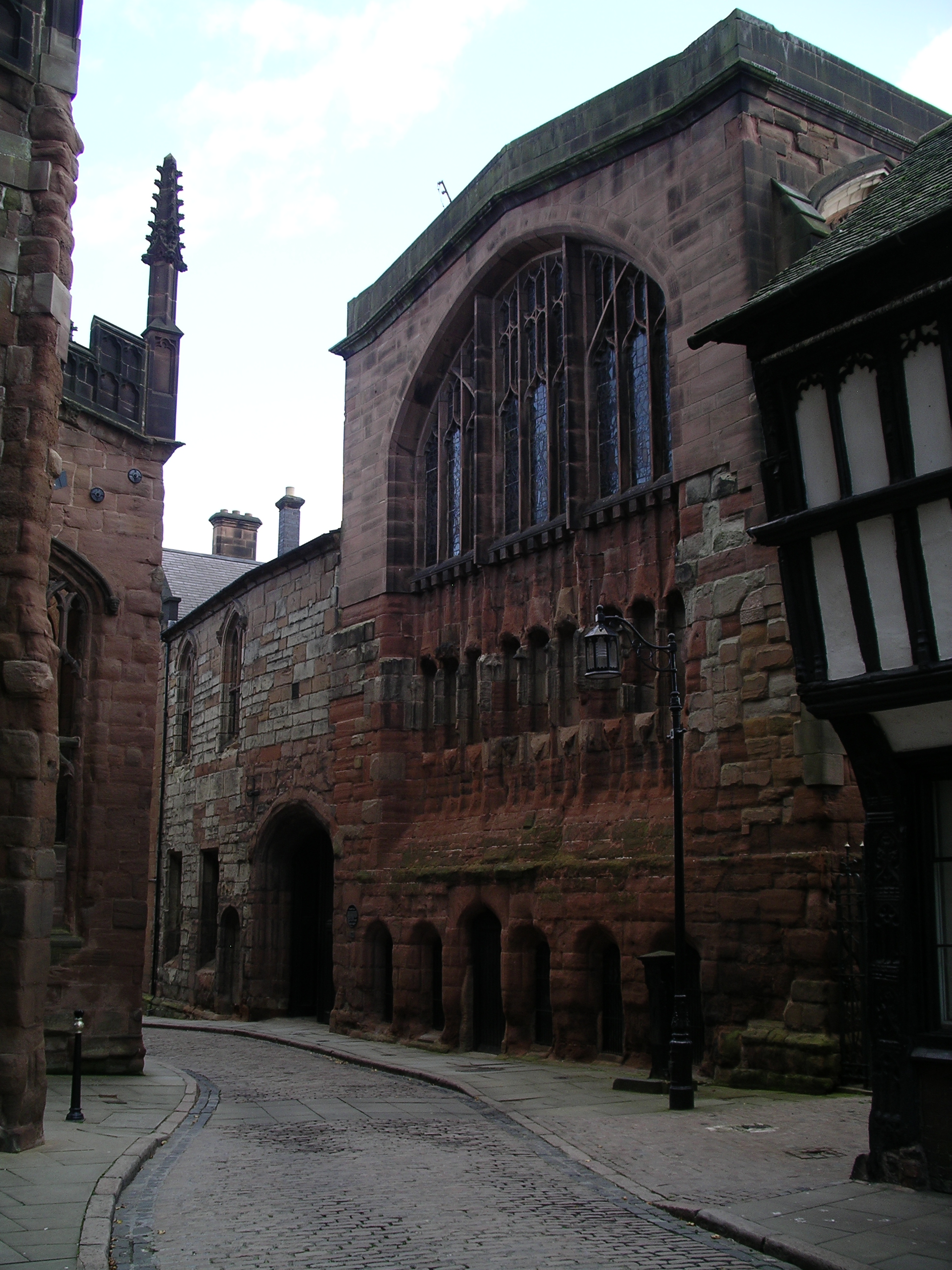
    So Edward Alleyn, Will Kemp and their team did what actors had always done in the old days: they packed up their gear in wagons and hit the road, touring the country and performing in many different towns and cites. The records of their journey are vague and sporadic, but they appear to have spent June and July in Kent, before travelling west to Bristol in August and then up through the Midlands from September to November. I'll explore this journey in more detail in a future post.

    As for Henslowe, we must assume that he arranged to have the Rose boarded up, and started to hunt around for other business opportunities, hoping every day that the ban would be overturned.


    What's next?


    As you can see, it is time for this blog to come to a halt, at least until December! But over the next few days, I'll add a few more posts to look back over what we learned.


    Further Reading


    • Carol Chillington Rutter, Documents of the Rose Playhouse (Manchester University Press, 1984), 62-3
    • Sally-Beth MacLean and Lawrence Manley, Lord Strange's Men and their Plays (Yale University Press, 2014), 248-258, 351-2.


    Comments?


    Did I make a mistake? Do you have a question? Have you anything to add? Please post a comment below!