Showing posts with label Other events. Show all posts

Sunday, 18 July 2021

18 July, 1597 - The Wise Man of West Chester and a departure

Here's what the Admiral's Men performed at the Rose playhouse on this day, 424 years ago...

Henslowe writes:  

marten slather went for the company of my lord admeralles men the 18 July 1597 

18 | tt at wisman  | 01 | 10 
In modern English:

Martin Slater went for the company of my Lord Admiral's Men, 18 July, 1597 

18th [July, 1597] ... total at Wise Man ... £1 and 10 shillings [i.e. 30 shillings]

A man, who might possibly be
wise, carved on the choir
stalls of Chester Cathedral
Today was an unusual day at the Rose, as we must say goodbye both to a play and to an actor.

On this day, the players performed The Wise Man of West Chester, a lost play that appears to have been about a wizard in the English city of Chester; you can read more about it in the entry for 3 December, 1594. But this is its final appearance in Henslowe's Diary after an extraordinary journey. With 32 performances in two and a half years, it is now the second most performed play in the Diary, beaten only by The Jew of Malta. The Wise Man of West Chester will probably return (the Diary will come to an end later this year, but the Rose performances will not), but for us, this is farewell to a lost icon of the stage. 

Curiously, Henslowe also notes that an actor has departed: Martin Slater "went for" the company, meaning that he left. We don't know much about Slater's role in the company up to this point, but he had belonged to it since at least 1594, and is mentioned in the surviving 'plot' of Frederick and Basilea. 

Slater appears to have taken with him some of the company's playbooks (that is, texts marked up for performance), because next year Henslowe will make notes in the Diary about trying to get them back. These playbooks include some retired plays - parts one and two of Hercules, Phocas, and Pythagoras - but also Alexander and Lodowick, which was on a stage only a few days ago.

It seems that Slater's departure absence is an unexpected problem, as there will soon be a hiatus in the company's output. Watch this space!


FURTHER READING


Martin Slater information


  • Carol Chillington Rutter, Documents of the Rose Playhouse (Manchester University Press, 1984), 89, 106, 111, 141-3.
  • Andrew Gurr, Shakespeare's Opposites (Cambridge University Press, 2009), 286


Henslowe links


Comments?


Did I make a mistake? Do you have a question? Have you anything to add? Please post a comment below!


Wednesday, 3 March 2021

3 March, 1597 - That Will Be Shall Be and a rival playhouse

Here's what the Admiral's Men performed at the Rose playhouse on this day, 424 years ago...

Henslowe writes:  begynyng in leant marche 1597 | 3 |  tt at what wilbe shalbe ... | 00 | 09 
In modern English: Beginning in Lent ... 3rd March, 1597  ... total at What Will Be Shall Be ... 9 shillings 

Welcome back! Today, after being silent for just over a fortnight, the Rose has re-opened. But the circumstances are rather mysterious. One might have assumed that the recent closure was due to the ongoing season of Lent, a time of religious austerity. Yet today, the company is back to work with three weeks of Lent still remaining. 

The Swan playhouse on a 1627 map
(at the bottom, labelled 'olde Playe house')
The closure may in fact have had more to do with some bad news: a new playhouse has opened, less than ten minute's walk from the Rose! Named the Swan, it was built by an entrepreneur and landowner, Francis Langley, and is now occupied by Pembroke's Men who are performing plays there.  

Henslowe has been aware of the looming problem of the Swan for some time. The playhouse seems to be have been constructed gradually during 1594 and 1595, but it may have been standing empty until now (for a summary of the Swan's history, see its entry in the Map of Early Modern London project). 

As for Pembroke's Men, we briefly heard tell of them back in September, 1593, when they were struggling terribly during the plague, and they also appeared at the Rose for a few days in June, 1594. Since then, they have been touring the country, lacking a London home. Finally, they have found one, just down the road from the Admiral's Men.

This is bad news for Henslowe. To make matters worse, two of the Admiral's Men's players, Thomas Downton and Richard Jones, have defected from the Rose to join Pembroke's at the Swan. Perhaps the recent break was less about piety and more about trying to find replacement actors. 

Henslowe and the Admiral's Men have regrouped and have reopened the Rose despite Lent. However, as we will see, they will often perform only on alternate days, perhaps as a gesture to the season. 

For their reopening, the Admiral's Men have chosen That Will Be Shall Be, an enigmatic lost play about which you can read more in the entry for 30 December, 1596. But if the company were expecting a throng of grateful Londoners who had missed them, they are sorely mistaken. Today's box office is tiny, indicating a mostly empty theatre. Perhaps the Swan is offering something more enticing?


A female archer tries to take down a war elephant. The man on the
right appears to share the sentiments of this play's title.
From the Smithfield Decretals (c.1340)


What's next?


As mentioned above, the Admiral's Men are often performing only on alternate days for the season of Lent. Henslowe's Diary ... as a Blog! will thus return on 5 March. See you then!


FURTHER READING


The Swan and the Rose in 1597


Henslowe links


Comments?


Did I make a mistake? Do you have a question? Have you anything to add? Please post a comment below!


Monday, 25 December 2017

25 December, 1593 - a new era at the Rose playhouse

Welcome back, and a very merry Christmas to all readers!

This blog is reawakening tomorrow, following an intermittent hiatus of nearly a year, in order to bring you a new set of entries from Henslowe's Diary. The plague that decimated London and forced the actors to take their plays on tour around England is now over. Tomorrow, the Rose playhouse will re-open to host plays once again, and Philip Henslowe will record their takings in his diary!

But things will be different. So far, we have been learning about the plays performed by Lord Strange's Men, a company that has occupied the Rose since February 1592. But the plague and the lengthy enforced tour has decimated London's playing companies, and Lord Strange's Men have broken up. Instead, a new company, the Earl of Sussex's Men, will be on the Rose stage performing their own collection of plays. This means that over the next few weeks we'll get to know ten plays that appear to have been Sussex's Men's stock repertory. Later on, a couple of familiar plays will show up - but let's not get ahead of ourselves.

Despite the change of faces, there may be some continuity. One theory about the fragmentary historical evidence holds that Edward Alleyn, the popular star of Lord Strange's Men, may have become a member of Sussex's Men, and may thus be appearing on the stage tomorrow (or may join the company a couple of weeks later). The reasons are complicated (and are fully explained here), but if this theory is correct, the personnel at the Rose may not have been quite so different as Henslowe's records suggest.

Anyway, for the next few months, on and off, this blog will describe Henslowe's records of the daily performances by Sussex's Men at the Rose. For the last few days, the actors have no doubt been running their lines and Henslowe's team have been freshening up the Rose after its long closure. But today, I want to believe that everyone took the day off for the traditional Elizabethan Christmas feast.

Tune in tomorrow for the first performance!


P3230876


Further reading


  • Scott McMillin, "Sussex's Men in 1594: The Evidence of Titus Andronicus and The Jew of Malta", in Theatre Survey 32.2 (1991): 214-23
  • Ronald Hutton, The Rise and Fall of Merry England (Oxford University Press, 1994), 6-7
  • Lawrence Manley and Sally-Beth MacLean, Lord Strange's Men and their Plays (Yale University Press, 2014), 322-5

Thursday, 23 June 2016

23 June, 1592 - The closing of the theatres

Today, the Rose playhouse was abruptly closed, along with all the other theatres in London. Lord Strange's Men no longer had a place to perform and were forced to leave the city. And this blog must therefore come to a sudden halt.

The Privy Council in 1604. Detail
from The Somerset House Conference
Why? It was apparently all because of that riot that broke out in Southwark a couple of weeks ago. The Privy Council had been informed about it and had decided to enhance security around the city. They explained that they had learned of "certain apprentices and other idle people" who had caused "the late mutinous and foul disorder in Southwark in most outrageous and tumultuous sort". They had now heard that the same people "have a further purpose and meaning on Midsummer Evening or Midsummer Night or about that time to renew their lewd assemblage".

Concerned about these possible future disturbances, the Privy Council therefore ordered the Mayor of London to "set a strong and substantial watch" about the city. But that was not all. They added that "for avoidance of these unlawful assemblies in these quarters", the Mayor should order

that there be no plays used in any place near thereabouts as the Theatre, Curtain or other usual place where the same are commonly used, nor no other sort of unlawful or forbidden pastimes that draw together the baser sort of people.

This ban on theatre and other gatherings for popular entertainment was to last until "the Feast of St Michael" - that is, 29th September.

London hit by plague, from John Taylor's The
Fearful Summer (1636)
This was a very extreme reaction to a disturbance in Southwark and the ban was surprisingly long. In her book on the Rose playhouse, Carol Chillington Rutter suggests that the Privy Council may not have been reacting only to the riot. The plague season was approaching, a time when large crowds of people could spread disease quickly. The Council may therefore have used the riot as an excuse to set up a ban that they had been planning to announce anyway.

Sure enough, the plague did indeed become a serious problem in the summer of 1592. As a result, the ban on theatre ended up being extended until 29th December. Whatever the reason for it, this was a terrible setback for Philip Henslowe, for Lord Strange's Men and for everyone else involved in the theatres of London. Suddenly, they were all out of work.

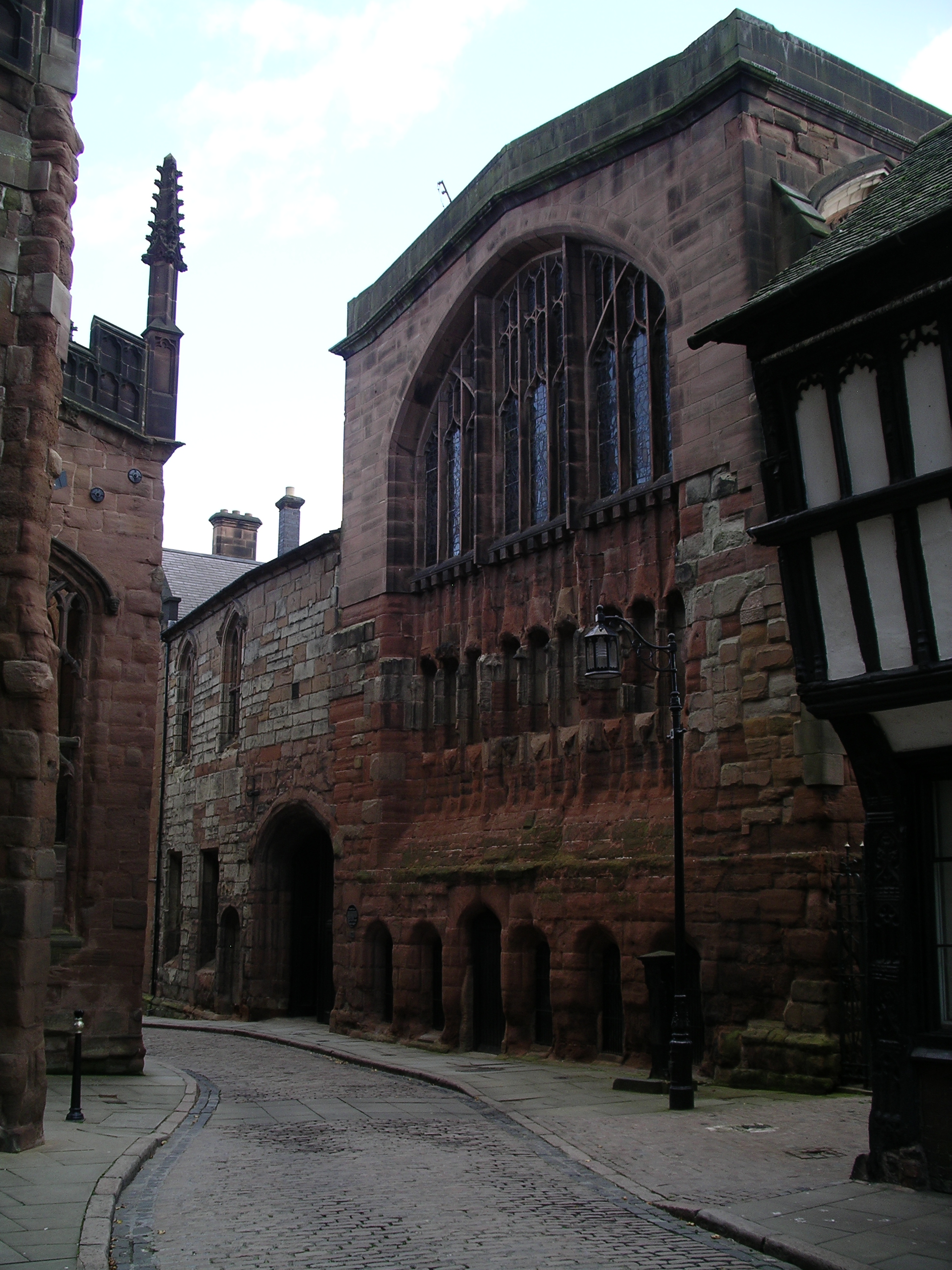
St Mary's Guildhall in Coventry, one
of the few surviving venues used 
by Lord Strange's Men during their 
1592 tour.
So Edward Alleyn, Will Kemp and their team did what actors had always done in the old days: they packed up their gear in wagons and hit the road, touring the country and performing in many different towns and cites. The records of their journey are vague and sporadic, but they appear to have spent June and July in Kent, before travelling west to Bristol in August and then up through the Midlands from September to November. I'll explore this journey in more detail in a future post.

As for Henslowe, we must assume that he arranged to have the Rose boarded up, and started to hunt around for other business opportunities, hoping every day that the ban would be overturned.


What's next?


As you can see, it is time for this blog to come to a halt, at least until December! But over the next few days, I'll add a few more posts to look back over what we learned.


Further Reading


  • Carol Chillington Rutter, Documents of the Rose Playhouse (Manchester University Press, 1984), 62-3
  • Sally-Beth MacLean and Lawrence Manley, Lord Strange's Men and their Plays (Yale University Press, 2014), 248-258, 351-2.


Comments?


Did I make a mistake? Do you have a question? Have you anything to add? Please post a comment below!

Sunday, 19 June 2016

19 June, 1592 - Harry VI

Here's what Lord Strange's Men performed at the Rose playhouse on this day, 424 years ago...

Henslowe writes: R at harey the vj the 19 of June 1592 ... xxxjs

In modern English: Received at Harry VI, 19th June, 1592 ... 31 shillings


1540s portrait of King
Henry VI
This play was almost certainly Shakespeare's First Part of Henry VI; you can read more about it in the blog entry for 3rd March.

Lord Strange's Men have returned to performing Harry VI weekly, with no notable change in its box office; it continues to be a merely average performer. It's intriguing that the last four performances have been on Mondays, but I have no explanation for why.

  • Friday, 3rd March - 75 shillings (premiere)
  • Tuesday, 7th March - 60 shillings
  • Saturday, 11th March - 47 shillings
  • Thursday, 16th March - 31 shillings
  • Tuesday, 28th March - 68 shillings (Easter Week)
  • Wednesday, 5th April - 41 shillings
  • Thursday, 13th April - 26 shillings
  • Friday, 21st April - 33 shillings
  • Thursday, 4th May - 56 shillings
  • Tuesday, 9th May - 22 shillings
  • Tuesday, 16th May - 50 shillings (Whitsuntide)
  • Monday, 22nd May - 30 shillings
  • Monday, 29th May - 24 shillings
  • Monday, 12th June - 32 shillings
  • Monday, 19th June - 31 shillings

Henslowe links


Comments?


Did I make a mistake? Do you have a question? Have you anything to add? Please post a comment below!